

What is Rennet?
Ah, rennet! That mysterious ingredient that turns milk into cheese. It’s like the fairy godmother of the dairy world, except instead of turning pumpkins into carriages, it turns liquid milk into solid, delicious cheese. But what exactly is rennet, and why does it have vegetarians giving it the side-eye? Let’s dive in! 👇
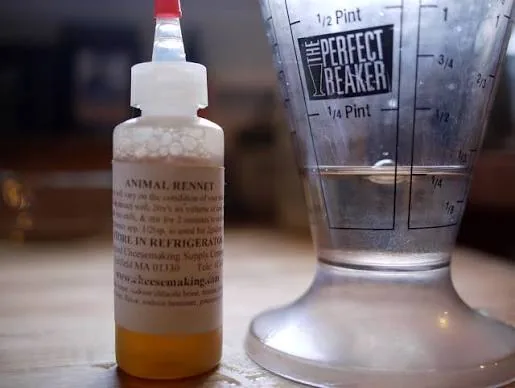
Rennet is a complex set of enzymes that help coagulate milk, separating it into curds (the solid part) and whey (the liquid part). This magical transformation is essential for making most cheeses. The key enzyme in rennet is chymosin, which is naturally found in the stomachs of young ruminants, such as calves 🐄, lambs 🐑, and baby goats 🐐. These animals produce chymosin to help them digest their mother’s milk (source).
Here’s where things get a little tricky 🤔. Traditional rennet is harvested from the stomach lining of these young animals, and as you might guess, that involves some... well, let’s just say posthumous participation from the calf. This is why animal rennet is not considered vegetarian. It requires the animal to be killed to extract the enzyme (source).
Huge bummer, right? If you are trying to be a vegetarian, we just eliminated a bunch of your food options. Thankfully, there is some good news: there are plenty of cheeses that are produced using non-animal rennet. That's what this site is all about...helping you find cheese options, restaurants, and products you can feel good about eating.
There are 4 types of rennet, as far as we know:
Types of Rennet
1. Animal Rennet 🐮
❌
This is the OG rennet, extracted from the stomachs of young calves (and sometimes lambs or goats). It’s been used for thousands of years in cheesemaking, and some traditional cheeses still require it. Real Parmigiano Reggiano from Italy, for example, is made with calf rennet (source). Unfortunately for vegetarians, this type of rennet is a no-go since it comes from animals that have been slaughtered.
2. Vegetable (or Plant)-Based Rennet 🥬
✅
For those who want their cheese without any animal involvement (except maybe a cow’s contribution to the milk), plant-based rennets are an option. These come from plants like nettles, thistles, or artichokes. Yes, your salad ingredients are moonlighting as cheesemakers! However, plant-based rennets can be a bit finicky; they sometimes impart a bitter flavor if used in aged cheeses. So while you might be able to make a great fresh cheese with plant rennet, your aged Manchego might taste more like an oversteeped cup of herbal tea.
3. Microbial Rennet 🦠
✅
Microbial rennet comes from molds. Don’t worry, not the fuzzy stuff on your forgotten pizza. Certain molds produce enzymes similar to chymosin that can coagulate milk just like animal rennet does. Microbial rennet is vegetarian-friendly and often used in commercial cheesemaking. However, it’s known to sometimes produce off-flavors in aged cheeses. So if your cheese tastes like it’s been hanging out with some questionable fungi at a party, microbial rennet could be to blame.
4. Fermentation-Produced Chymosin (FPC) 🧬
✅ - most vegetarians
🟡 or ❌ - some vegetarians
This one sounds super scientific because it is. FPC is made by putting a copy of the calf’s chymosin gene into bacteria, yeast or molds, which then produce chymosin through fermentation. It’s like brewing beer but with enzymes instead of hops! While FPC technically originates from an animal gene, no animals are harmed in its production process so most vegetarians consider this A-OK. Yet, there are others who avoid it because of its animal origins.
Read more about FPC here.
Sneaky Extras: Other Animal Enzymes 🕵️
Rennet isn’t the only animal enzyme that can end up in cheese. A cheese can be made with zero animal rennet and still not be vegetarian. Here are the ones to know about:
Animal Lipase 🧀
❌
Lipase breaks down the fat in milk, and that’s what gives some cheeses their sharp, tangy bite. It’s added for flavor, not to make the curds. Most lipase used in cheese comes from animals (source), usually young calves, goats or lambs. The sharp version of provolone, for example, gets its kick from goat lipase (source).
Cheeses where lipase often shows up: Romano, provolone, some blue cheeses and some grated Parmesan. Back in 2008, Kraft and Organic Valley both said they used animal lipase in some of these products (source). Non-animal lipase exists too, so it depends on the maker.
Pepsin 🐄
❌
Pepsin is another stomach enzyme that curdles milk. It’s sometimes blended right into animal rennet. One widely sold commercial rennet is 80% chymosin and 20% beef pepsin (source).
The Label Problem 🏷️
In the U.S., all of these can hide behind one word on the label: "enzymes." That could mean microbial rennet, FPC, animal rennet, animal lipase, or a mix. That’s why Rennet Scout checks lipase and other animal enzymes separately from rennet. When a cheese skips animal rennet but uses another animal enzyme, we label it Animal enzyme, not rennet, so you’re not caught off guard.
What's a Vegetarian To Do?
Don't despair! Many cheeses today are made with vegetarian-friendly alternatives (#2, 3, or 4 above). In fact, as of 2008, less than 5% of cheese produced in the U.S. still used traditional animal rennet! (source). In our own research, we've found about 10% of the cheeses we've checked use animal rennet. So most cheese skips animal rennet 💪. That’s great news, but it doesn’t make every one of those cheeses vegetarian, because of the sneaky extras above.
It's a pain in the butt to decipher the labels of cheeses because they like to simply say "enzymes." Not helpful, cheese companies!
On top of that, restaurants rarely go into such detail on their allergens and ingredients pages.
This site is your friend. We did the research. That means scouring the internet and even contacting companies and restaurants directly. The result is this never-ending directory of information on cheeses, brands, restaurants and even individual menu items (in some cases). We thought, "why not share this resource with the rest of the world?" That's why the site exists. Hopefully it helps you on your quest for truly vegetarian cheese!
P.S. Ricotta and cream cheese usually don’t need any kind of rennet at all! A few cream cheeses do add a little, so it’s still worth a quick look at the label. Go forth and enjoy your cheese 🧀!